Data to make better decisions
Data orchestration platform capable of integrating, managing, securing and analyzing internal and external stakeholder data.

Data orchestration platform capable of integrating, managing, securing and analyzing internal and external stakeholder data.

Integrate external engagement deeply into decision making at every level of your organization.
Bad stakeholder interactions can erode trust very quickly, mishandling of information can foster mistrust. Regaining that trust can be difficult.
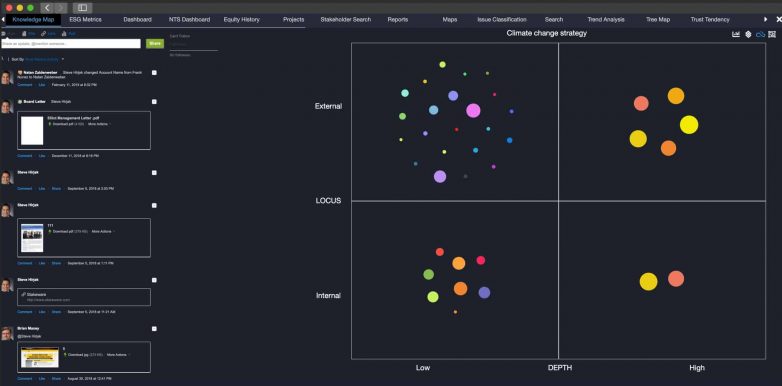
Use StakeWare’s in-depth profiling capabilities to become more effective at understanding the priorities and objectives of your stakeholders.
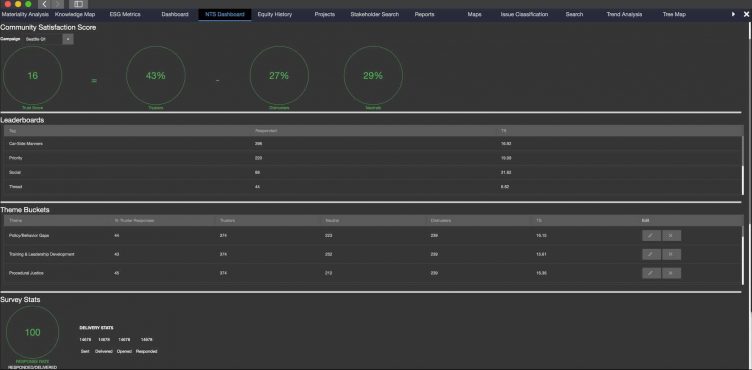
Leading data-driven organizations recognize the causal relationship between data, analytics, trust and business outcomes.
Use StakeWare’s prescriptive capabilities to foster more productive and trusted relationships with your stakeholders by proactively addressing and taking responsibility for the issues they care about most.
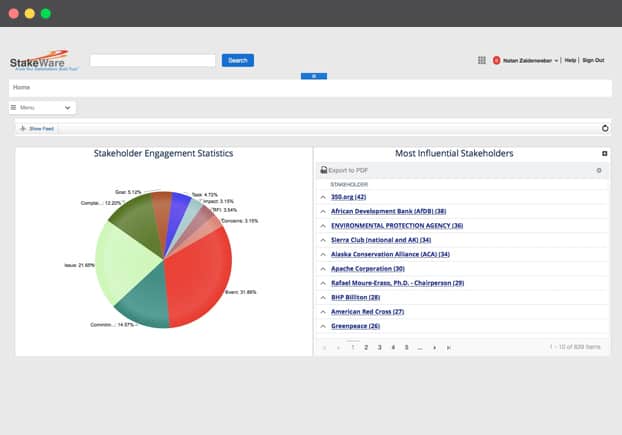
The most valuable type of information you can have is what you learn by engaging stakeholders directly. Track all information on any stakeholder interaction so you can remember who people are, and maintain institutional memory over time.
Set up an engagement strategy that is consistent across every division and at every level of your organization so that external engagement is embedded in everyday business.
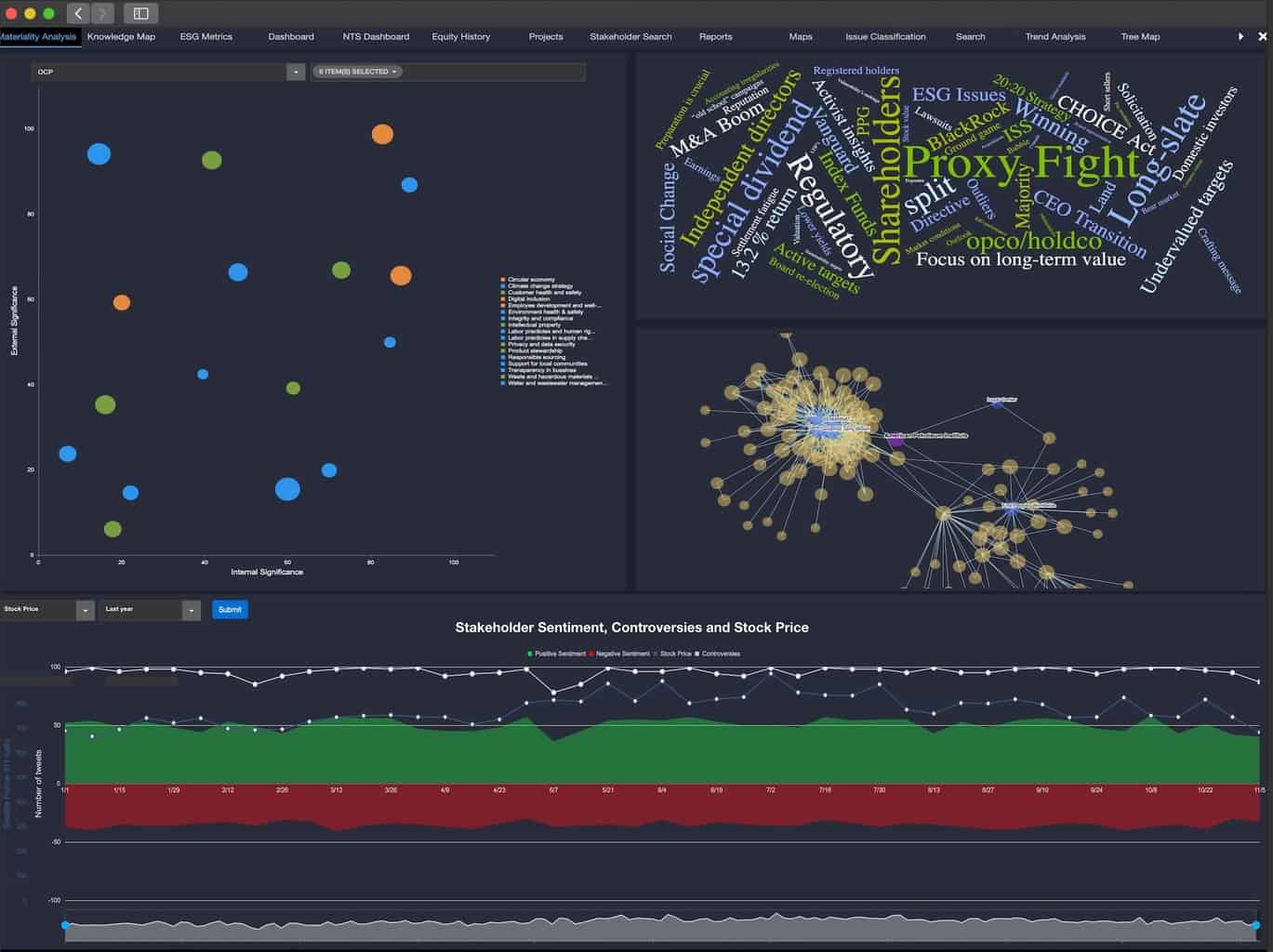
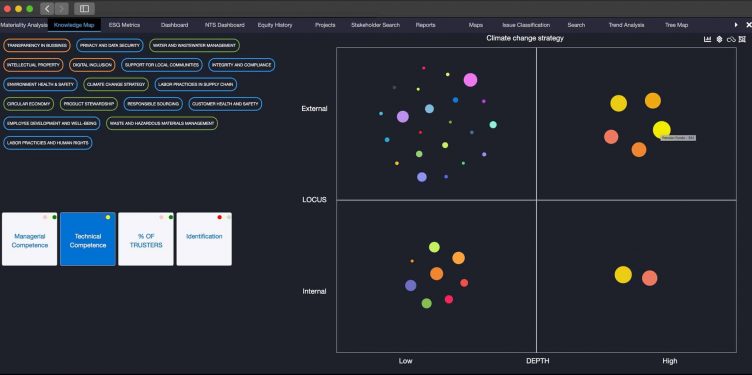
Easy-to-use reporting and an intuitive dashboard view make it easy to understand how stakeholder opinions are changing over time, and offer actionable advice on how to best engage with the most influential stakeholders.
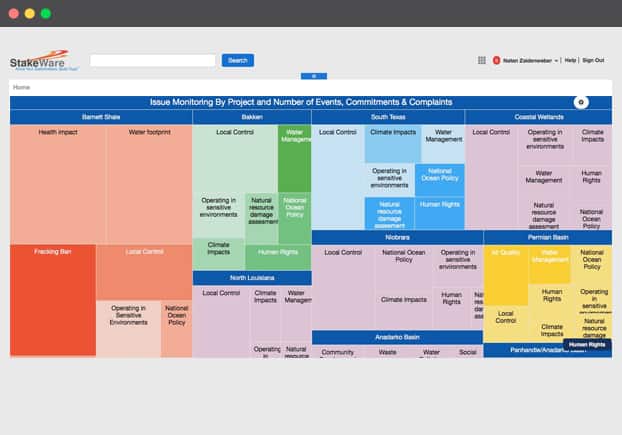
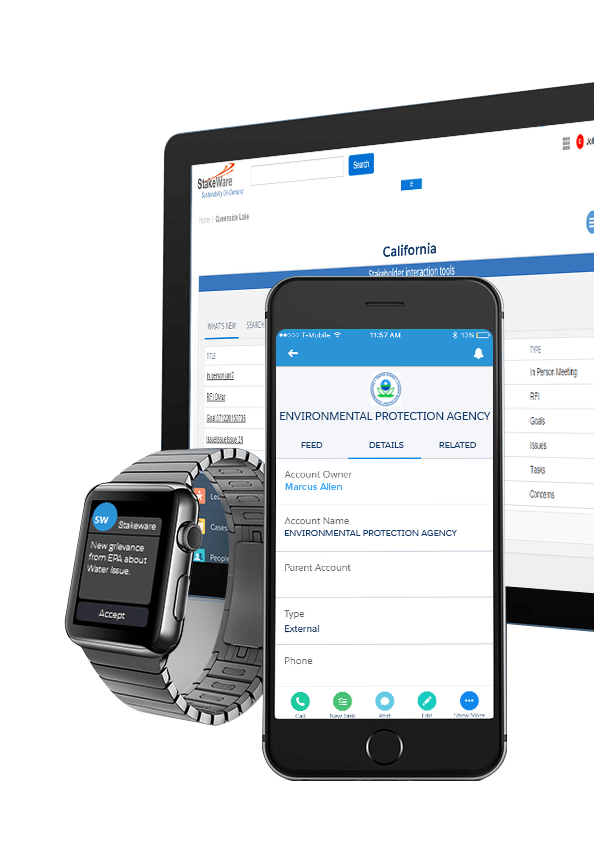
A fully-functional mobile app that puts StakeWare’s core features in the palm of your hand so you can engage smarter — anytime, anywhere.